



[ad_1]
It’s a common phenomenon for anyone who exercises regularly: two people with similar fitness levels can do the same exercise and get completely different results. It is extremely frustrating for the person who can’t seem to get better, even though they are trying their best.
A group of exercise science researchers at Brigham Young University know the feeling and have raced to solve the problem. Good news: They think they’ve cracked the code.
The team’s newly published research reveals a more effective way to determine how hard each person should work to achieve the best results. A study that appears in the Journal of Applied Physiology lays out a new system for creating not just personalized workouts, but “prescribed” workouts that deliver results regardless of a person’s current health.

“One day we will be able to prescribe exercise like medicine,”
said Jayson Gifford, BYU professor of exercise science and lead author of the study. “To prescribe medicine, you need to have predictable results for each dose of medicine. We found the same applies to exercise.”
Research explains that when exercise is personally prescribed based on what is called “critical power,” the results show a greater improvement in endurance and greater long-term benefits for the individual.
The authors define critical power as the highest level of our comfort zone. “It’s the level at which we can operate for a long period of time before things start to get uncomfortable,” said lead study author Jessica Collins, a former graduate student at BYU.
It works something like this: Let’s say two friends have a similar maximum heart rate. Prior understanding of exercise would suggest that if they run together at the same speed, they should have very similar experiences. However, it happens that when these two friends run at 6 mph, the exercise is easy for one, but difficult for the other.
These distinctive experiences at the same speed and the same percentage of maximum heart rate are because 6 mph is below one friend’s critical power, but above the other’s critical power.
When exercise is below a person’s critical power, their body can compensate for the energy challenge and achieve a comfortable and controlled homeostasis.
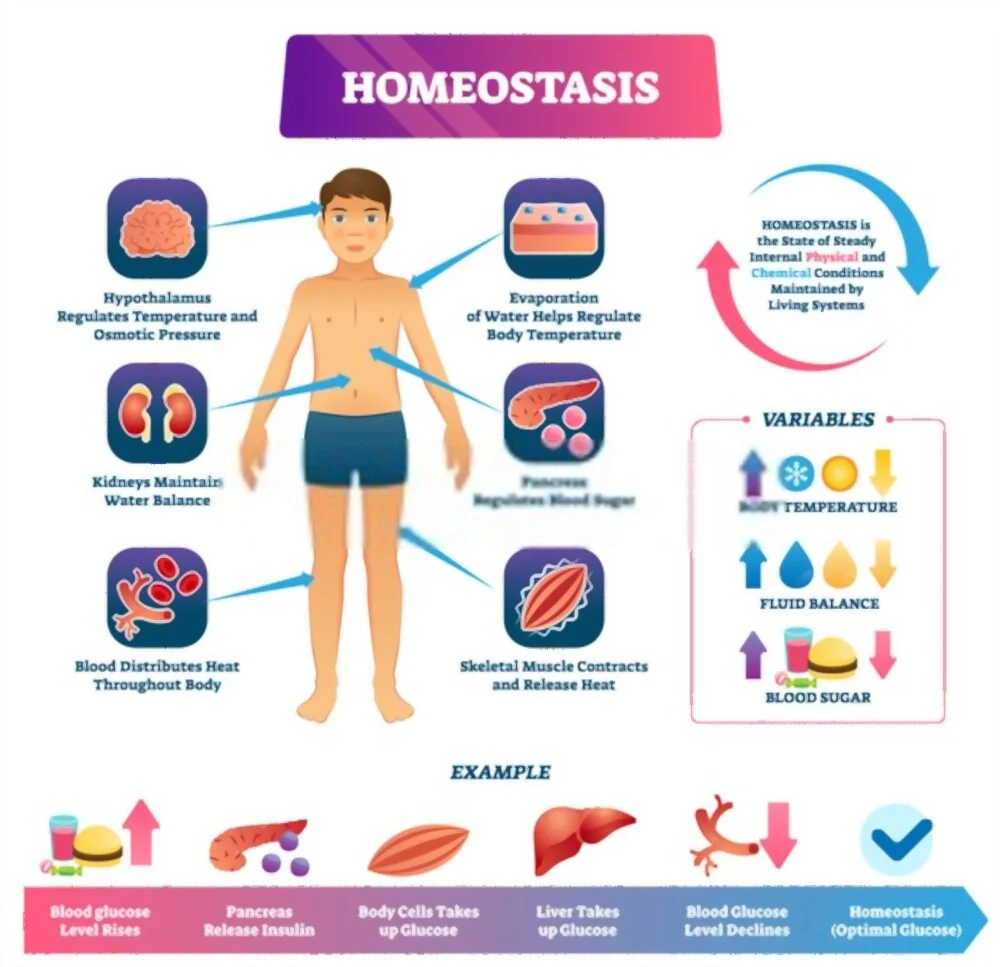
However, when exercise is above critical power, your body cannot fully compensate for the energy demand, resulting in exhaustion.
Traditionally, individualized exercise has been recommended based on a fixed percentage of your maximum rate of oxygen consumption (VO2 Max) or your maximum heart rate. Collins and Gifford said using “critical power” is a better way to prescribe exercise because it not only accurately serves athletes and those in great shape, but also serves those who are older or have a more sedentary lifestyle.
“This kind of research helps all kinds of people, no matter how active they are today,”
Collins said.
For the study, Collins, Gifford and their co-authors recruited 22 participants between the ages of 18 and 35 who were healthy but had low levels of physical fitness.
Participants underwent eight weeks of supervised exercise training where they were randomly assigned to either high-intensity cycling training or moderate-intensity continuous cycling training. Exercises are traditionally prescribed based on an individual’s maximum heart rate or VO2 max.
The researchers found that prescribing exercise based on VO2 Max as a benchmark results in alarming variability in results. There were participants who benefited significantly from the training period and others who did not, even though the training was tailored to them. They compared this with each individual’s critical power and found that it accounted for 60% of the variability in their findings.
If exercises had been prescribed using critical power as a reference point compared to their heart rate, the results would have varied less, meaning that the training sessions would have been more effective and beneficial for each participant.
“One of the main reasons people don’t exercise as much as they should is because they tried something in the past and it didn’t work the way they expected,”
Collins said. “The great thing about basing exercises on critical power is that we can almost always guarantee the result, which allows us to help people reach their fitness goals.”

To calculate a person’s critical power, researchers had participants complete various exercise distances (i.e., running, cycling) as fast as they could. They then took the average speed and inserted that data into a proprietary formula that determines the relationship between exercise distance and exercise time to produce a critical power number.
They found that a person’s critical thinking power can increase substantially with exercise training, making things that used to be difficult less difficult, less uncomfortable, and less tiring.
“Exercise is so good for you that you’re going to see some kind of benefit no matter what you do,”
Gifford said. “This research simply informs people that they can more fully optimize their exercise, so they get more out of it. We’re excited when it becomes more accessible for people to learn about their personal critical power in the near future.”
[ad_2]

