You might think we have a mystery in our hands as how can the body store fat when you barely eat anything, right?
Well, it isn’t one of Agatha Christie’s plots. In fact, the reason your body is storing fat when you don’t eat much will fall into one of these categories:
1. You are binge eating
You don’t eat much.
You skip breakfast and lunch, then you get strong cravings for sugary foods or carbohydrates later, but you are being good so you don’t let the cravings control you but gosh, you really could do with a “fill-in-your-sugary-craving-poison”.
Eventually you eat. And eat…until you lose track of what you have ingested!
Binge eating is a terrible idea because of its health implications as well as the mental health problems associated with it.
Keep a food diary for a month if you are putting on weight and you don’t think you eat enough for it to happen. It might be an eye opener!
2. Insulin resistance
Insulin is a small naturally occurring chemical in our body. Insulin acts like a key, whose purpose is to bind to a receptor (the lock) on the surface of fat and muscle cells.
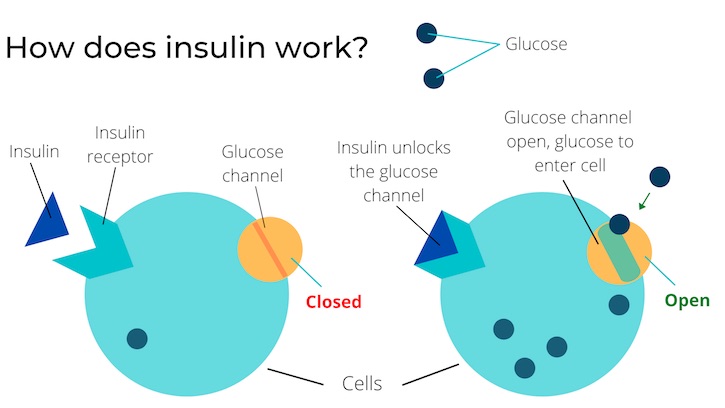
So from the image above you can see that the mechanism is easy. When insulin binds to the insulin receptor, it opens a glucose channel to allow glucose to enter those cells.
This process is how we get glucose from our blood stream (after it has been broken down from the food we eat) into the cells of our body, to provide our body with energy.
Insulin resistance happens when fat cells become resistant to the effects of insulin. This resistance occurs because the fat cells have changed the shape of the insulin receptor, to prevent glucose from entering into the fat cell.
The process of the lock changing shape is called insulin resistance. The effect of this is more insulin is needed to force the receptor to work. The pancreas needs to produce more insulin resulting in accelerated pancreatic failure and possibly diabetes.
With insulin resistance, abdominal visceral fat leads to deposition of adipose tissue around the waist.
There could be 2 possible causes:
- Basal fasting insulin levels are high;
- Stress is causing higher Cortisol levels, which leads to increase in Insulin levels which lead to fat accumulation around your midriff/ waist in particular.
Reversing insulin resistance involves losing fat cells and might include:
- Use of metformin medication
- Eating well
- Moving your body more
- Being a healthy weight
Try Intermittent fasting with a keto nutrition plan, combined with mild exercise and Good sleep, also keep yourself hydrated and your stress levels under control.
3. You are in perimenopause or have reached menopause.
As women get older, they might notice that maintaining their usual weight becomes more difficult. In fact, many women gain weight around the menopause transition.
The good news is: menopause weight gain isn’t inevitable. You can reverse course by paying attention to healthy-eating habits, maybe talking to a professional about Hormone Replacement Therapy (HRT), and leading an active lifestyle.
So what exactly causes menopause weight gain? Well in one word: Hormones!
The weigh gain is usually more noticeable around your belly because the hormonal changes of menopause make you more likely to gain weight around your abdomen than around your hips and thighs.
Muscle mass typically diminishes with age, while fat increases. Losing muscle mass slows the rate at which your body uses calories (metabolism). This can make it more challenging to maintain a healthy weight. If you continue to eat as you always have and don’t increase your physical activity, you’re likely to gain weight.
Genetic factors might also play a role in menopause weight gain. If your parents or other close relatives carry extra weight around the abdomen, you’re likely to do the same.
Other factors, such as a lack of exercise, unhealthy eating and not enough sleep, might contribute to menopause weight gain and you really need to address it as menopause weight gain can have serious implications for your health. Excess weight, especially around your midsection, increases your risk of many issues, including:
-
- Breathing problems
- Heart and blood vessel disease
- Type 2 diabetes
- Excess weight also increases your risk of various types of cancer, including breast, colon and endometrial cancers.
The best ways to prevent or reverse weight gain after menopause:
- Move more. Physical activity, including aerobic exercise and strength training, can help you shed excess pounds and maintain a healthy weight. As you gain muscle, your body burns calories more efficiently — which makes it easier to control your weight.
For most healthy adults, experts recommend moderate aerobic activity, such as brisk walking, for at least 150 minutes a week or vigorous aerobic activity, such as jogging, for at least 75 minutes a week.
In addition, strength training exercises are recommended at least twice a week. If you want to lose weight or meet specific fitness goals, you might need to exercise more.
- Eat less. To maintain your current weight — let alone lose excess pounds — you might need about 200 fewer calories a day during your 50s than you did during your 30s and 40s.
To reduce calories without skimping on nutrition, pay attention to what you’re eating and drinking. Choose more fruits, vegetables and whole grains, particularly those that are less processed and contain more fiber.
In general, a plant-based diet is healthier than other options. Legumes, nuts, soy, fish and low-fat dairy products are good choices. Meat, such as red meat, or chicken, should be eaten in limited quantities. Replace butter, stick margarine and shortening with oils, such as olive or vegetable oil.
- Check your sweet habit. Added sugars account for nearly 300 calories a day in the average American diet. About half of these calories come from sugar-sweetened beverages, such as soft drinks, juices, energy drinks, flavored waters, and sweetened coffee and tea.
Other foods that contribute to excess dietary sugar include cookies, pies, cakes, doughnuts, ice cream and candy.
- Limit alcohol. Alcoholic beverages add excess calories to your diet and increase the risk of gaining weight.
- Try HRT. Many women find that by balancing their hormones, they rev up their metabolism.
- Seek support. Surround yourself with friends and loved ones who support your efforts to eat a healthy diet and increase your physical activity. Better yet, team up and make the lifestyle changes together.
4. Stress!
Weight gain can be a sign that our hormones have gone haywire and usually it is stress related.
Let me explain.
Our hormones have a lot to do with weight gain during stress; our brain detects ‘threat’ and goes into the typical flight or fight response.
This response releases a cascade of chemicals including adrenaline, Corticotropin-releasing hormone, and cortisol.

This allows your body to feel alert and ready for any ‘threat’.
Ok, You might be asking yourself what is so threatening about driving to a meeting or going about your daily shores but listen, your body has not evolved much since humans figured out we could do magic and light fires.
So let’s give our bodies the credit it deserves. this ingenious mechanism would have saved your life if you were running from a predator back when.
In any case, after the fight or flight response, the effects of adrenaline wear off and as a lot of energy has been used up, your body needs replenishing with food supply.
When cortisol levels rise, you start to feel fatigued and hungry.
An increase in cortisol also affects cravings – a reason why many of us tend to eat sugary, fatty foods when stressed.

Interestingly enough, lab mice seen to have it figured out. A study found when lab mice were under ‘stress’ they ate high-fat pellets when given the choice between them and their normal feed. Hmm…Maybe they have heard of keto!
But stress is no joke. It can cause anxiety, it can lead to so many other physical and mental issues, which in turn also trigger emotional eating, as well as eating ‘mindlessly’.
If you were going to eat a biscuit and end up eating the whole packet without realizing it, you have experienced this.
So in comes that bad boy, the dreaded Cortisol. If you are lucky enough to never have heard of cortisol, it is the main stress hormone and is secreted in large amounts during stress.
The release of cortisol impacts the way your body metabolizes glucose, how much energy your muscles burn, and tolerance to stress.
Now let us give credit where credit is due. Cortisol has important functions in the body, making sure you wake up without feeling like a zombie for instance. And to be fair fair, usually cortisol, glucose, and insulin work in harmony to keep blood sugars stable.
Here is how:
If you have not eaten for many hours, blood sugar drops and sends a message to the adrenal glands to release cortisol.
This shifts and organizes fats, amino acids from muscles, and glucose from glycogen stores in the liver to keep your body and brain fueled in the absence of food.
Basically, It is trying to keep you alive.
But…under stress, both insulin and cortisol levels remain high which means more glucose is stored as fat in the abdominal fat cells.
Research shows fat cells have stress hormone receptors for cortisol, and there are more receptors in the abdomen cells than anywhere else.
Yep. We can all agree this is very unfair!

So let’s take stock and be mindful because the constant influx of cortisol and stress can cause mayhem in the body as well as symptoms like fatigue, low-energy, reliance on caffeine and other stimulants as energy sources, difficulty sleeping, inability to cope with stressful situations, and regular mood swings.
A snow ball effect is created and the stress can lead to conditions like fibromyalgia and chronic fatigue syndrome plus lack of sleep can disrupt the functioning of ghrelin and leptin, both hormones that control appetite…and so many other health problems.
Try meditation, a supplement like 5-htp and time to yourself to mitigate stress.