
[ad_1]
Being overweight or obese is linked to an overall increased risk of cancer. There are numerous reasons for this. According to Cancer Research UK, losing weight can help to reduce your chances of developing cancer.
The UK research is not alone. Further afield, research from the American Cancer Society, points to the same conclusion.
Excess body weight is thought to be responsible for about 11% of cancers in women and about 5% of cancers in men in the United States, as well as about 7% of all cancer deaths.

Being overweight or obese is clearly linked with an increased risk of many types of cancer, including:
- Breast cancer (in women past menopause)
- Colon and rectal cancer
- Endometrial cancer (cancer of the lining of the uterus)
- Esophagus cancer
- Gallbladder cancer
- Kidney cancer
- Liver cancer
- Ovarian cancer
- Thyroid cancer
- Stomach cancer
Being overweight or obese might also raise the risk of other cancers, such as:
- Non-Hodgkin lymphoma
- Male breast cancer
- Cancers of the mouth, throat, and voice box
- Aggressive forms of prostate cancer
The link to body weight is stronger for some cancers than for others. For example, excess body weight is thought to be a factor in more than half of all endometrial cancers, whereas it is linked to a smaller portion of other cancers.
How do you know if you are obese?
The graph below shows you the classification depending on your BMI (Body Mass Index)
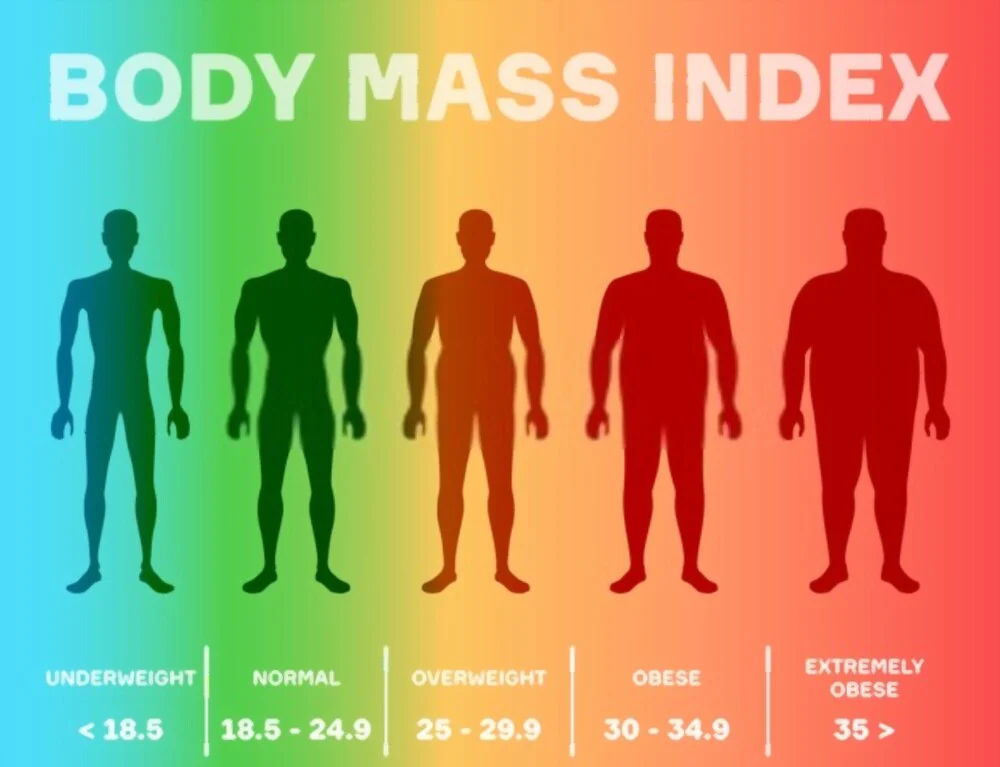
The links between body weight and cancer are complex and are not yet fully understood. For example, while studies have found that excess weight is linked with an increased risk of breast cancer in women after menopause, it does not seem to increase the risk of breast cancer before menopause. The reasons for this are not clear.
The timing of weight gain might also affect cancer risk. Being overweight during childhood and young adulthood might be more of a risk factor than gaining weight later in life for some cancers.
For example, some research suggests that women who are overweight as teenagers (but not those who gain weight as adults) may be at higher risk for developing ovarian cancer before menopause.
Clearly, more research is needed to better define the links between body weight and cancer.
AICR’s latest report found that excess body fat increases the risk of many cancers, including colorectal, post-menopausal breast and esophageal cancer. Too much body fat can spur cancer growth by several ways. Excess fat tissue can lead to chronic inflammation and unhealthy levels of insulin and other hormones, for example, which are associated with cancer cell growth.
“The 16 percent reduction in obesity-related cancers is a promising finding and potential indication that the risk associated with excess weight are reversible by weight loss,”
said Nigel Brockton, Vice President of Research at the American Institute for Cancer Research—“This study also highlights the urgent need for larger randomized trials with greater statistical power to test the effects of weight loss on the risk of obesity-related cancers.”
How might body weight affect cancer risk?
Excess body weight may affect cancer risk in a number of ways, some of which might be specific to certain cancer types. Excess body fat might increase cancer risk by affecting:
- Inflammation in the body
- Cell and blood vessel growth
- Cells’ ability to live longer than they normally would
- Levels of certain hormones, such as insulin and estrogen, which can fuel cell growth
- Other factors that regulate cell growth, such as insulin-like growth factor-1 (IGF-1)
- The ability of cancer cells to spread (metastasize)
The million dollar question – does losing weight reduce cancer risk?
Research on how losing weight might lower the risk of developing cancer is limited. Still, there’s growing evidence that weight loss might reduce the risk of some types of cancer, such as breast cancer (after menopause) and endometrial cancer.
Some body changes that occur as a result of weight loss suggest it may, indeed, reduce cancer risk.

For example, overweight or obese people who intentionally lose weight have reduced levels of certain hormones that are related to cancer risk, such as insulin, estrogens, and androgens.
While we still have much to learn about the link between weight loss and cancer risk, people who are overweight or obese should be encouraged and supported if they try to lose weight.
Aside from possibly reducing cancer risk, losing weight can have many other health benefits, such as lowering the risk of heart disease and diabetes. Losing even a small amount of weight has health benefits and is a good place to start.
[ad_2]